

Introduction: That Cheap Repair Might Cost You More Than You Think
Your phone screen cracks. Your battery dies fast. You search online and find a repair shop offering a fix for half the price of the official service centre. Sounds like a great deal, right?
Not always.
Every day, thousands of Australians choose cheap, non-genuine phone parts to save a few dollars, and many end up regretting it. Whether it is a cracked iPhone screen, a swollen battery, or a broken charging port, using counterfeit or third-party components can turn a simple repair into a costly disaster.
This article breaks down the real risks behind non-genuine phone parts, explains what can go wrong, and helps you make smarter decisions when your phone needs fixing. This is everything you need to know before handing your device to any repair shop.
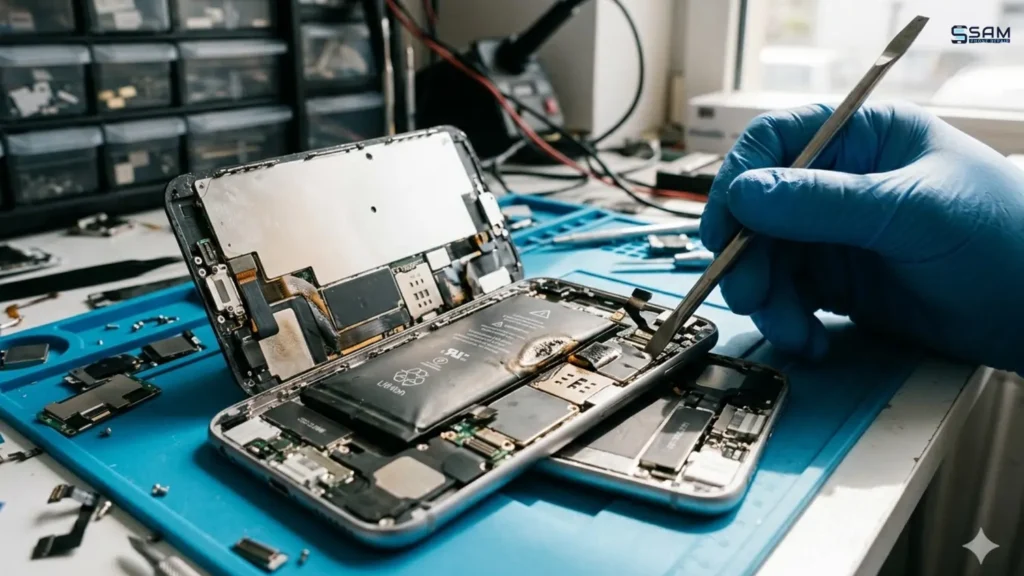
What Are Non-Genuine Phone Parts?
Non-genuine parts, also called aftermarket, counterfeit, or third-party components, are phone parts that are not made or approved by the original manufacturer. These include replacement screens, batteries, cameras, charging ports, and even microphones.
They are often sold cheaply and used by budget repair shops. On the surface, they look the same. Underneath, they are a completely different story.
10 Reasons Why Using Non-Genuine Parts for Phone Repairs Is Risky
1. Your Phone Screen Loses Touch Accuracy and Colour Quality
One of the most common repairs is a broken screen. When a non-genuine display is fitted, users often notice that the touch response feels off. Scrolling becomes laggy. Colours look washed out or too bright. In some cases, ghost touches appear, where the screen registers taps you never made.
Original screens are calibrated to work perfectly with your device’s processor and software. Cheap replacement screens skip that calibration entirely. A study by repair industry analysts has found that over 60 percent of screen-related complaints after repairs involve aftermarket displays, not the original damage.
2. Battery Safety Becomes a Serious Concern
Non-genuine batteries are one of the biggest safety risks in phone repairs. They are often made with lower-grade lithium cells that do not meet the original voltage and capacity standards.
In 2018, a well-documented case showed a counterfeit iPhone battery catching fire inside a bag, injuring the phone owner. Similar incidents have been reported in Australia. A swollen battery, overheating phone, or sudden shutdown are all warning signs of a failing non-genuine battery. In worst cases, these batteries can cause fire or chemical burns.
3. Water Resistance Is Completely Destroyed
Many modern phones like the iPhone 14, Samsung Galaxy S23, and Google Pixel 7 carry an IP67 or IP68 water resistance rating. This rating is only valid when every component inside is sealed properly using genuine adhesives and parts.
When a repair shop uses a non-genuine screen or rear panel, the original seals are broken and not properly replaced. The result is a phone that looks fine on the outside but is now fully exposed to water damage on the inside. One splash, one drop in a sink, and your phone is gone.
4. Face ID, Fingerprint, and Biometric Functions Stop Working
Apple and Samsung both use hardware-level security chips that are paired directly to specific components. When you replace a screen or front camera assembly with a non-genuine part, Face ID on an iPhone or the under-display fingerprint scanner on a Samsung may stop working entirely.
This is not a software glitch. It is a deliberate security measure to protect user data. Non-genuine parts break that hardware pairing. Apple has confirmed this through official repair documentation, and many users in Australia have experienced losing Face ID permanently after using unauthorised parts.
5. Software Conflicts and Error Messages Begin to Appear
Newer iPhones running iOS 15 and above will display warning messages if non-genuine parts are detected. Messages like “Unable to verify this iPhone has a genuine Apple display” or “Important battery message” appear in settings and cannot be dismissed.
On Android devices, non-genuine components can trigger compatibility warnings or even cause boot loops, where the phone restarts constantly without loading properly. These software conflicts reduce the overall performance of your phone and can make everyday tasks frustrating, often requiring professional software repairs to restore full functionality.
6. Your Phone Overheats Faster
Genuine components are engineered to manage heat efficiently. Non-genuine chips, batteries, and screens often lack proper thermal management. This causes your phone to run hotter than normal, especially during gaming, video streaming, or charging.
Chronic overheating damages your phone’s internal motherboard over time. It shortens the life of your processor and accelerates battery degradation. What started as one cheap repair begins to destroy multiple internal systems slowly.
7. Charging Speed and Efficiency Drop Significantly
If a non-genuine charging port or battery is installed, your phone may charge more slowly than before. Fast charging features like Apple’s 20W charging or Samsung’s 45W Super Fast Charging require genuine hardware to work at rated speeds.
Non-genuine components often lack the correct resistors and chips to communicate properly with fast charging adapters. Your phone will still charge, but it might take twice as long and may not charge to full capacity.
8. Camera Quality and Performance Decline
A cracked rear camera lens is sometimes replaced with a non-genuine part at budget repair shops. While the glass itself might look the same, the optical coatings, focus calibration, and aperture alignment are completely different.
Photos taken after a non-genuine camera repair often appear blurry, lack sharpness, or show colour inaccuracies. Video stabilisation may also stop working. If photography matters to you, a non-genuine camera component is a shortcut that delivers noticeably worse results.
9. You Void Your Warranty and Insurance Coverage
Using non-genuine parts almost always voids your manufacturer’s warranty. Apple, Samsung, and most major brands state clearly in their warranty terms that repairs using unauthorised components are not covered.
Your phone insurance policy may also be affected. Many Australian phone insurance providers have clauses that exclude damage caused by unapproved repairs. If something goes wrong after a non-genuine part repair, you may be fully responsible for the cost with no support from the manufacturer or insurer.
10. The Total Cost Ends Up Being Higher
This is the hardest lesson to learn. A non-genuine screen repair might cost $80 instead of $160. But when the screen starts failing three months later, when your battery swells, when your Face ID stops working, or when water gets in through a broken seal, the combined repair bill quickly exceeds what you would have paid for a genuine repair from the start.
Genuine repairs done the first time properly protect your investment. Cheap repairs create a cycle of follow-up fixes that drain your wallet over time.
When Should You Seek a Professional Repair?
You should visit a reputable repair specialist when your phone shows any of the following signs: the screen is unresponsive or cracked, the battery drains within hours, the phone overheats regularly, charging stops working, or the device has been water-damaged.
Do not attempt to repair your phone yourself using parts purchased from unverified online sellers. The risks are high, and the margin for error is very slim.
Practical Tips Before You Choose a Repair Shop
Always ask the repair shop whether they use genuine or OEM-certified parts. Ask if the repair will affect your phone’s warranty. Check Google reviews and look for repair shops that offer a written warranty on their work. A trustworthy shop will always be transparent about the components they use.
Frequently Asked Questions
Q: Are non-genuine phone parts always dangerous?
A: Not every aftermarket part will cause immediate harm, but the risks are significantly higher than with genuine components. Over time, quality issues become apparent and can lead to device failure.
Q: Will my phone work normally after a non-genuine screen repair?
A: It may function initially, but you are likely to notice issues with touch response, colour accuracy, and software warnings, especially on iPhones running iOS 15 or later.
Q: Can I switch back to genuine parts after a non-genuine repair?
A: Yes, but some functions like Face ID or fingerprint sensors may not be restorable depending on how the previous repair was done.
Q: How do I know if my phone has non-genuine parts?
A: On iPhones, go to Settings, then General, then About. If non-genuine parts have been installed, iOS will display a notification about the relevant component.
Q: Are non-genuine batteries safe to use in Australia?
A: The ACCC strongly advises against using substandard batteries. Only use batteries from reputable sources that meet Australian safety standards.
Final Thoughts
Your smartphone is one of the most used and most valuable devices you own. It holds your photos, banking apps, personal messages, and daily communications. Risking all of that for the sake of a cheaper repair is rarely worth it.
Genuine parts cost more for a reason. They are engineered, tested, and certified to work correctly with your specific device. They protect your data, your safety, and your investment.
If you are in Adelaide and looking for a phone repair service you can trust, Sam Phone Repair uses quality parts and transparent service to make sure your device is restored properly the first time. No shortcuts, no surprises.