

Have you ever opened your MacBook Pro all the way back and watched the screen suddenly go dim or completely fade out? You are not imagining it. This is a real and frustrating problem that thousands of MacBook Pro users experience, and it can happen without any warning. Whether your display dims when fully extended, flickers at certain angles, or goes completely black when you push the lid past a certain point, there is almost always a reason behind it and in many cases, a fix.
This guide walks you through everything you need to know about MacBook Pro screens fading, dimming, or going black when fully opened. We cover the common causes, the fixes you can try at home, and when it’s time to seek professional MacBook Repair for a reliable solution.
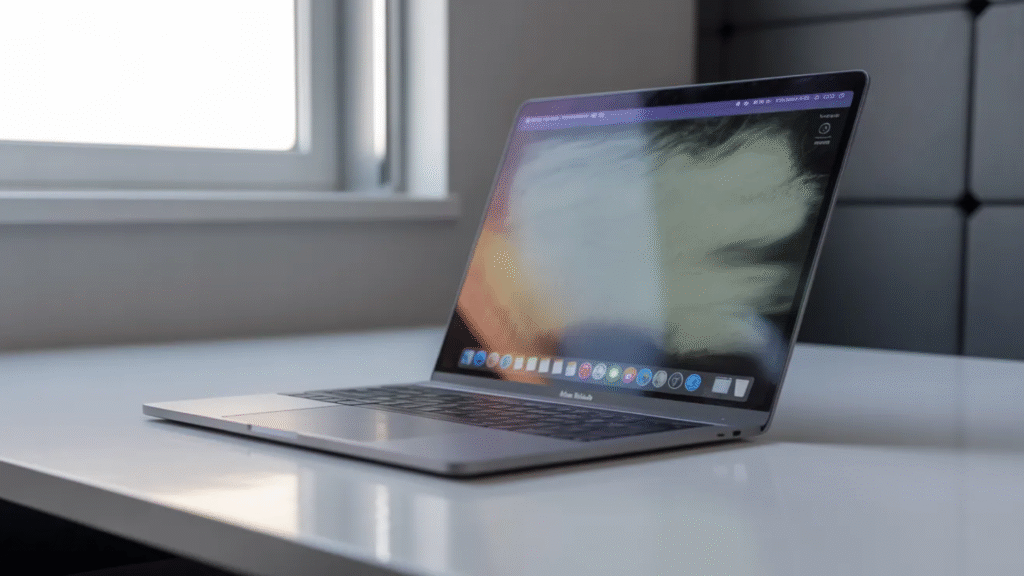
Why Does a MacBook Pro Screen Fade at Full Open
Before jumping into solutions, it helps to understand what is actually going on inside your MacBook Pro when this screen fading problem occurs.
The MacBook Pro display is connected to the logic board through a thin cable that runs through the hinge. When you open the lid fully, that cable gets pulled taut. If there is any wear, fraying, or damage to the display flex cable, opening the screen all the way can interrupt the signal between the logic board and the display panel. The result is a screen that fades, flickers, or cuts out entirely at that specific angle.
This is not just a theory. In fact, Apple issued a repair programme for certain MacBook Pro models (specifically 2016 to 2018 models) due to a well-documented issue with the display and backlight flex cable wearing down over time from regular hinge movement. Apple called this the “Flexgate” issue. Users around the world reported their screens dimming from the bottom or going black when fully opened exactly what you might be experiencing right now.
But Flexgate is not the only cause. There are several hardware and software-related reasons your MacBook Pro screen might be fading out at full open.
Common Causes of MacBook Pro Screen Dimming at Full Open
Damaged or Worn Display Flex Cable
This is the most common hardware cause. The display data cable, also called the LVDS or eDP cable, flexes every single time you open and close your MacBook. Over months and years, this repeated bending causes micro-tears in the cable. When you open the lid to its maximum angle, the cable stretches just enough to lose connection, causing the display to dim or go dark.
Loose or Disconnected Display Cable
Sometimes the cable is not torn but simply loose at the connector point on the logic board or the display panel. Even a slight loosening can disrupt the backlight signal, leading to screen flickering or fading at certain angles.
Failing Backlight or LED Driver
The backlight on your MacBook Pro display is powered by a small driver circuit. If this component is failing or has been damaged by liquid, power surge, or general wear, the screen may behave inconsistently particularly under physical stress like opening the lid fully.
Software and macOS Settings
Not every case of screen dimming is a hardware problem. macOS has several built-in features that control display brightness automatically. True Tone, Auto Brightness, and Battery Saver mode can all cause your screen to dim unexpectedly. If these settings are active, your screen may appear to fade when you open it in bright environments or when the battery is low.
GPU or Logic Board Issue
In more serious cases, a fault on the logic board or a problem with the integrated or discrete GPU can cause display output problems. This is less common but worth knowing, especially if your MacBook Pro also experiences random restarts, kernel panics, or display glitches during normal use.
How to Fix MacBook Pro Screen Fading at Full Open
Step 1: Check Your Display Settings First
Before assuming the worst, rule out software causes. Go to System Settings, then Displays. Make sure Auto Brightness is turned off and that True Tone is disabled temporarily to test. Also check Energy Saver settings and make sure your display sleep timer is not set too aggressively. Go to Battery settings and check if Low Power Mode is enabled, as this can reduce brightness automatically.
Step 2: Reset the NVRAM and SMC
Resetting the NVRAM (non-volatile RAM) and SMC (System Management Controller) clears stored display preferences and hardware settings that might be causing your screen to behave incorrectly.
To reset NVRAM on Intel MacBook Pro, restart your Mac and immediately hold Option, Command, P and R together for about 20 seconds. Release the keys and let it restart normally.
To reset the SMC on an Intel MacBook Pro with a non-removable battery, shut down your Mac, hold Shift, Control, Option and the Power button together for 10 seconds, release all keys, then press the Power button to turn it back on.
On Apple Silicon MacBook Pros, these resets happen automatically during restart, so simply shutting down and restarting is enough.
Step 3: Update macOS
Apple regularly releases software updates that address display driver bugs and hardware communication issues. Check that your MacBook Pro is running the latest version of macOS by going to System Settings, General, then Software Update. A pending update might be the entire reason your display is misbehaving.
Step 4: Test in Different Lighting and Angles
Try opening your MacBook Pro to different angles and note exactly where the fading begins. If the screen only fades past 130 to 150 degrees of opening, this is a very strong indicator of a physical cable issue. Take note of whether the dimming starts from the bottom of the screen (a classic Flexgate symptom) or affects the whole display evenly.
Step 5: Check for Apple Repair Programmes
Apple has extended repair programmes for certain MacBook Pro models affected by known display issues. Visit Apple’s official support page or contact Apple Support directly with your serial number to check whether your device qualifies for a free or discounted repair. Models from 2016 to 2019 especially should be checked.
Step 6: Use an External Display as a Diagnostic Tool
Connect your MacBook Pro to an external monitor using a USB-C to HDMI or Thunderbolt cable. If the external display works perfectly, the problem is isolated to your built-in display or its cable, ruling out GPU or logic board issues. This is a simple but powerful diagnostic step.
When to See a Professional
If you have tried the software fixes and the screen still fades when fully opened, the issue is almost certainly hardware-related. Specifically, a damaged display flex cable, a failing backlight driver, or a loose internal connection will need physical repair.
While Software Repair Services can help with system glitches and settings issues, attempting to open the MacBook Pro chassis yourself carries real risks, including voiding your warranty, damaging delicate components, or making the problem worse. Unless you have prior experience with MacBook repairs, this is a job for a trained technician.
Signs you should book a repair straight away include the screen going completely black at full open, flickering lines appearing along the bottom edge of the display, the problem getting progressively worse over weeks, or any discoloration or backlight bleeding visible on the panel.
Frequently Asked Questions
Q: Why does my MacBook Pro screen go black when I open it fully?
A: This is most commonly caused by a worn or damaged display flex cable that loses connection when the lid is fully extended. It can also be related to a loose connector or a failing backlight driver.
Q: Is MacBook Pro screen fading covered under warranty?
A: If your device falls within Apple’s extended repair programme for display cable issues, you may be eligible for a free repair. Check your serial number on Apple’s support site to confirm eligibility.
Q: Can I fix a MacBook Pro dim screen issue myself?
A: You can try software fixes like resetting NVRAM and SMC, updating macOS, and adjusting display settings yourself. Physical repairs to the display cable or backlight should be handled by a qualified technician.
Q: Does screen dimming damage my MacBook Pro?
A: If the cause is a failing cable, leaving it unrepaired can lead to complete display failure over time. It is best to get it assessed sooner rather than later.
Q: What is Flexgate on MacBook Pro?
A: Flexgate is a term used to describe a widespread issue affecting certain MacBook Pro models where the display backlight cable wears out from normal hinge movement, causing screen dimming or blackouts, particularly when the lid is opened fully.
Get Your MacBook Pro Screen Fixed in Adelaide
If you are based in Adelaide and your MacBook Pro screen keeps fading out at full open, the team at Sam Phone Repair, a trusted tech repair shop, can help. With locations across Adelaide, the technicians at Sam Phone Repair have hands-on experience diagnosing and repairing MacBook Pro display issues, including flex cable replacements, backlight repairs, and full screen assessments.
Whether you are in the Adelaide CBD, the inner suburbs, or further out, you can swing by or get in touch to book a diagnostic check. Most display cable issues can be assessed quickly, and the team can give you a clear idea of what needs to be done without any pressure.
Your MacBook Pro is an investment worth protecting and a fading screen is not something you should have to put up with.